





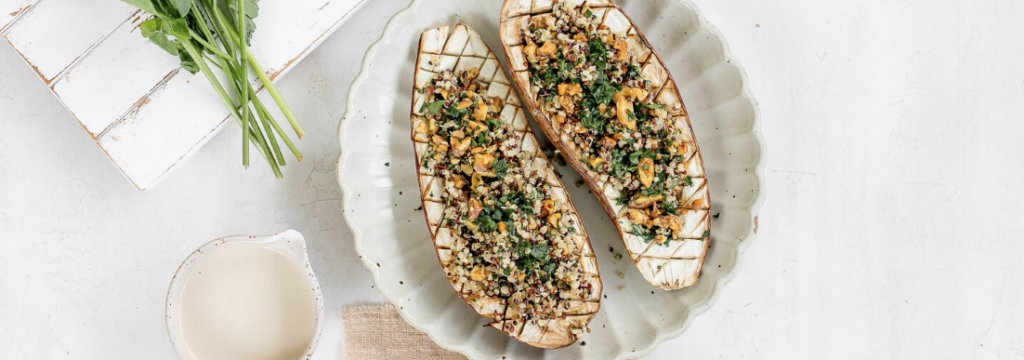
Vegetarian Stuffed Eggplant With Quinoa, Walnuts, and Tahini
Let’s be honest: “stuffed eggplant” sounds like something your well-meaning aunt brings to a potluck that nobody quite knows how to feel about. This is not that. This is the recipe that will make you genuinely excited about a vegetable that has historically gotten a bad reputation mostly by association.
Here is what actually happens: you slash the eggplant into a crosshatch, roast it at high heat until the flesh goes soft and creamy (I’m so sorry for that visual but I promise it tastes great) and the edges do something wonderful and slightly charred, and while that is happening you pull together a quinoa filling with toasted walnuts and cumin that smells aggressively good. Then you make a four-ingredient tahini sauce and try not to eat it directly from the bowl before the eggplant is done. The whole thing takes under 45 minutes and looks significantly more impressive than the effort involved.
Nutritionally it is doing real work too, without needing to announce it. Quinoa and tahini together make this a complete protein. The walnuts add omega-3 fatty acids and a crunch that the recipe genuinely needs. Parsley, which most people treat as garnish, provides vitamin K and folate in quantities that actually matter. The lemon juice in the tahini sauce improves iron absorption from the quinoa and tahini alongside its obvious job of keeping the sauce from tasting flat. It is the kind of meal where everything is there for a reason and the reason also happens to taste good.
Prep time: 10 minutes Cook time: 35 minutes Serves: 2
Ingredients
- 2 medium eggplants, halved lengthwise
- Sea salt and black pepper, to taste
- ⅓ cup dry quinoa, rinsed
- ½ cup walnuts, toasted and roughly chopped
- ¼ tsp ground cumin
- ¼ cup fresh parsley, finely chopped
For the tahini sauce:
- ¼ cup tahini
- 1 tsp lemon juice
- ¼ cup water
- 1 garlic clove, minced
- Salt and pepper to taste
Instructions
- Preheat the oven to 425°F (220°C) and line a baking sheet with parchment paper.
- Using a sharp knife, score the flesh of each eggplant half in a crosshatch pattern approximately one inch deep, being careful not to cut through the skin. Season generously with salt and pepper.
- Place the eggplants cut-side up on the prepared baking sheet. Roast for 30 to 35 minutes until the flesh is completely tender and the edges are lightly charred.
- While the eggplant roasts, cook the quinoa according to package directions. Once done, fluff with a fork and combine with the toasted walnuts, cumin, and parsley. Season with salt and pepper.
- Whisk together the tahini, lemon juice, water, and garlic in a small bowl until smooth. Season to taste. If the sauce is thicker than you like, add water a teaspoon at a time until it reaches a drizzleable consistency.
- Place the roasted eggplant halves on plates, top generously with the quinoa mixture, and finish with the tahini sauce drizzled over the top or served alongside.
Nutrition (per serving, approximate)
| nutrition facts | amount |
|---|---|
| Calories | ~520 |
| Protein | 16g |
| Carbohydrates | 48g |
| Fat | 32g |
| Fiber | 14g |
| Iron | ~4mg |
| Calcium | ~120mg |
| Magnesium | ~110mg |
What Makes This Worth Eating
Eggplant is the structural heart of this dish and an underrated vegetable nutritionally. It provides nasunin, an anthocyanin antioxidant concentrated in the skin that has been studied for its role in protecting cell membranes from oxidative damage. It is also high in fiber and low in calories, making it one of the more generous bases for a filling vegetarian meal.
Quinoa is one of the few plant foods that provides all nine essential amino acids, making it a complete protein source. It also contributes iron, magnesium, and B vitamins alongside its carbohydrate content. Combined with the walnuts and tahini in this recipe, it makes a genuinely protein-complete vegetarian plate.
Walnuts are among the best plant sources of omega-3 fatty acids, specifically ALA, alongside their polyunsaturated fat content. Toasting them before adding to the filling is not optional for best results: heat activates the oils and produces a depth of flavor that makes a noticeable difference to the finished dish.
Tahini is ground sesame paste and one of the most nutritionally useful condiments in a plant-based kitchen. It provides calcium, iron, zinc, and healthy fats in a form that blends into a sauce that makes almost everything it touches better. The garlic and lemon juice in this version keep it from feeling heavy.
Parsley is easy to treat as garnish but functions as a genuine nutritional contributor here. A quarter cup provides meaningful vitamin K, vitamin C, and folate. It also brightens the flavor of the quinoa filling in a way that dried herbs simply cannot replicate.
Lemon juice in the tahini sauce does two things simultaneously: it cuts the richness of the tahini and provides vitamin C that improves iron absorption from both the quinoa and the tahini. A small but genuinely useful detail.
Notes
Scoring the eggplant: Do not skip this step. The crosshatch pattern is what allows the heat to penetrate properly and the flesh to cook evenly. Without it, the exterior overcooks before the interior is tender.
Toasting the walnuts: Toast in a dry pan over medium heat for three to four minutes, stirring regularly, until fragrant and lightly golden. Watch them closely as they go from toasted to burnt quickly.
More flavor: Add a small handful of chopped medjool dates to the quinoa mixture for sweetness that works surprisingly well against the cumin and tahini. A teaspoon of maple syrup stirred into the tahini sauce is also a good addition if you prefer a slightly sweeter finish.
Leftovers: Store in an airtight container in the refrigerator for up to three days. The components keep better stored separately if possible, as the quinoa absorbs moisture from the eggplant over time.
Serving size: One serving is two eggplant halves with approximately ¾ cup of the quinoa mixture.
FAQs
Can I make this ahead? Yes. The eggplant can be roasted and the quinoa filling prepared up to a day in advance. Store separately and reheat the eggplant in a 375°F oven for ten minutes before assembling. Make the tahini sauce fresh or store it separately in the fridge for up to three days.
Can I add more protein? The quinoa and tahini together already provide a solid protein foundation for a vegetarian meal. However, adding a tin of drained chickpeas to the quinoa filling is an easy way to increase protein further without changing the flavor profile.
My tahini sauce seized up and went thick. What happened? This is normal. Tahini can thicken dramatically when it first contacts water or acid. Keep whisking and add water a teaspoon at a time until it loosens to the consistency you want. It will come together.
Can I grill the eggplant instead of roasting? Yes, though the method changes slightly. Grill the scored halves cut-side down over medium heat for eight to ten minutes until tender, then flip for two minutes to finish. You will get more char and a slightly smokier flavor, which works well with this filling.
Looking for more plant-based recipes that actually satisfy? Browse the full recipe collection here.











Read the Comments +